
 |
|
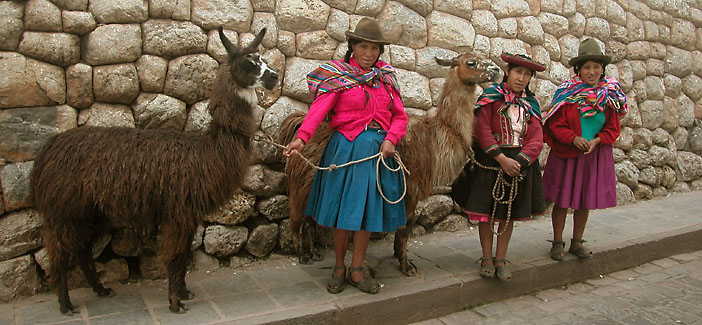
| On the streets of Cuzco, the old
Inca capital, it was not uncommon to find both local residents and nearby
Quechan villagers dressed in the colourful traditional costumes of their
region. Meanwhile, we're still working on being able to recognize
the difference between llamas and alpacas.
|
|
 |
March 16 -- After
two days adjusting to the thin air of the 11,000 foot altitude of Cuzco,
high in the Andes, we ventured out today to visit some nearby villages
and Inca ruins. It was quite the journey. After about 30 minutes
of switchbacks, hairpin turns and spectacular vistas, it was easy to understand
why the bus ride from Lima to Cuzco takes over 30 hours. We were
glad we flew.
Cuzco, the ancient Inca capital, is adjacent to an area known as El Valle Sagrado, the Sacred Valley of the Incas. The Urubamba River flows through here past Andean villages, colonial towns and ancient Inca ruins and terraced hillsides. The stonework was remarkable and quite extensive. Those Incas were a busy crew! Stone agricultural terraces rose for well over 1000 meters up from the valley floor, most of them still in use with a variey of indigenous vegetables and grains. According to Martine, our guide, Peru is home to over 100 varieties of corn and over 300 varieties of potatoes. The produce available in the local markets certainly display a range of colour and size unmatched back home. In Cuzco and the surrounding villages, many of the old Inca buildings have been dismantled and used to build the cathedrals and houses of the Spanish colonial towns. Only the foundations and a few walls remain. The Inca's hilltop fortresses and temples remain much more intact. The ruins we visited today at Pisac and Ollantaytambo were quite stunning both in their location and their construction. It's the end of the summer and the end of the rainy season here, but it is also Sunday, so there were quite a few other folks out exploring the ruins and the markets. In Lima we saw very few other foreign travelers. I guess they're all up here. There's one nice thing about most of the archeological sites we've visited over the past few months: they're all pretty big, so they rarely feel crowded. There's a quiet serenity to these ancient places. We could explore them for days.
March 13 -- We were taking the scenic route through central Lima this morning on our way over to the main market, el Mercado Central, and found ourselves in front of el Teatro Principal. Ever curious, we wandered in for a look, talked to a couple guys, and were escorted into the hall where the national ballet company was in rehearsal for Swan Lake. This was quite a nice treat! The market was quite interesting too. As in Asia, there were a few fruits we didn't recognize, but we were delighted to find an ample selection of cheeses and yogurt. We stocked up! For a national capital, Lima wasn't as hectic and scary as we had anticipated. They make really good coffee in this country and the beer's fine too. Our hotel is quiet and comfortable and only three blocks from the Plaza de Armas, an interesting place to hang out and be surrounded by eager kids selling postcards, little stuffed llamas, gum and shoeshines. There are three of us traveling together now. Carol and I have been joined in South America by my old friend John Koop, from Newfoundland. The music in Lima was good, but not quite what we expected. "Musica de Peru?" I enquired. "No," they told us, "Cuban salsa." I'm sure we'll find the pan pipes of the Andes soon.
|
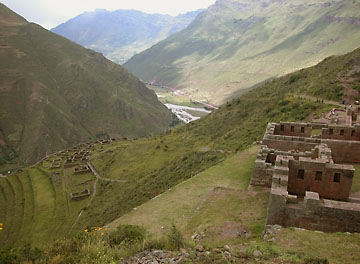
| The Inca ruins at Pisac offer a great view
of the Urubamba River and the Sacred Valley. The surrounding hillsides
are covered with stone terraces where corn, potatoes and other crops continue
to be grown.
|
|
 |
|
| At the market in the nearby village of Pisac,
the locals are often as colourful as the weaving and other goods being
sold.
|
|
 |
|
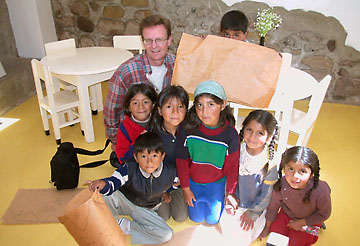
| The folks who run the Niños Hotel,
our
home base in Cuzco, also run a hot lunch program that feeds over 250 local
children each day. Our friend John joined some of the niños
at their "Children's Restaurant".
|
|
 |
|
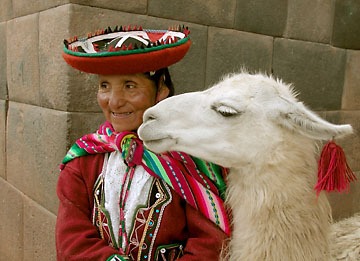
| You never know who you'll run into on the street corners of Cuzco. | |
|
|
|


