
On the Road in Trinidad (de Cuba)
 |
The
breezes were warm in Trinidad, the town hadn't changed much at all.
Mercedes,
the host at our casa particular, seemed
thrilled to see us again. It was easy to settle in, Trinidad hadn't
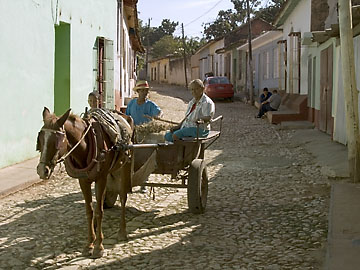
changed much since our last visit. It was all new of course for Rebecca and Alison, our two Australian traveling buddies, so we had fun reacquainting ourselves with all our favourite spots. There's a nice low-key pace to this town, influenced in part by the winding cobble-stone streets, which are great for slowing down vehicles, animals, vagabonds and wandering pedestrians. The stones are mostly imported from Europe, arriving as ballast in the old Spanish galleons that came to loot the New World. The old colonial houses are mostly about 200 years old as well, in various bright colours and red tile rooftops throughout. The old town dates back to 1514, and was the third Spanish settlement in the New World, The town site was originally settled by the Taino Indians, who alas happened to be panning for gold when the Spanish conquistadores first showed up. Trinidad has had quite a colourful history through the years, and a number of museums to tell the tales, but we found ourselves more attracted by the contemporary night life and traditional music. There's a beach too, of course. Playa Ancon is about 12 kilometers away, a cheap and easy taxi ride. Not too crowded at all, soft white Caribbean sands, guys wandering by selling little pizzas, and really clear waters fading to that classic turquoise. Good place to spend an afternoon.
 |
||
| On
Calle Manuel Solano in Trinidad. This was our street, just one block
long. It didn't take long to get to know all the locals. |
|||
 |
|||
| Cuba's
recent Green Revolution has brought an abundance of fresh, tasty
organic produce to every household. This roving fruit stand was just
one of the many we encounted regularly in Trinidad. |
|
|
||||||||||
|
||||||||||


